


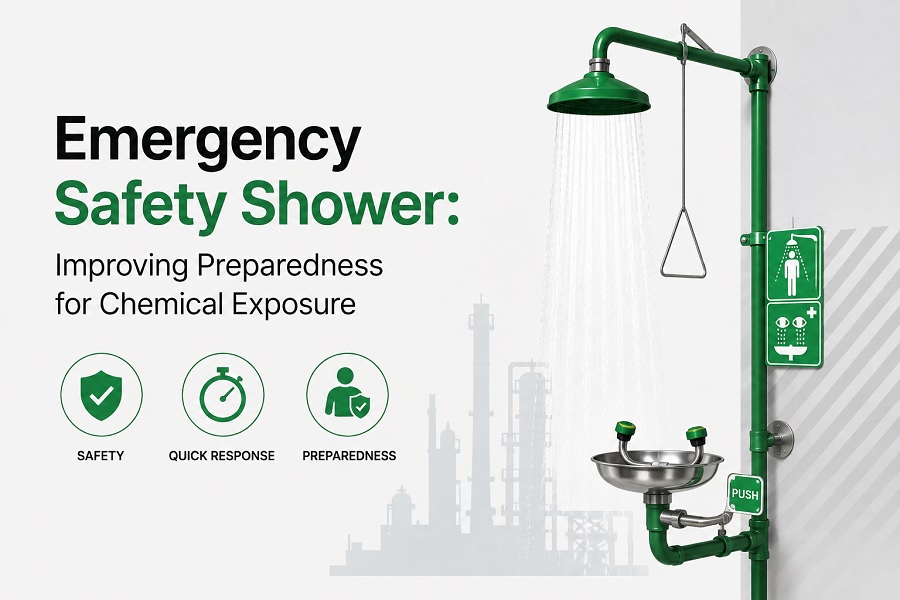
Workplaces that handle corrosive or hazardous substances need emergency procedures for accidental exposure. An emergency safety shower provides rapid access to flushing water so workers can rinse contaminants from the body while assistance is arranged. Correct selection, accessible placement, routine testing and practical training contribute to an effective response.
What an Emergency Safety Shower Should Provide
Chemical splashes can affect the skin, eyes and clothing within seconds. The consequences depend on the substance, concentration, contact time and exposed area. Prompt flushing may help dilute and remove contaminants, but workers should also follow the product label, safety data sheet, workplace procedures and medical advice.
Suitable storage, transfer systems, personal protective equipment, spill controls and worker instruction remain essential. Emergency washing equipment provides an additional safeguard if exposure occurs despite these controls.
A suitable unit should activate easily and deliver a continuous supply of tepid flushing water for at least 15 minutes, in line with relevant requirements. Combination shower and eyewash units may be appropriate where both skin and eye exposure are foreseeable.
Location and Accessibility
Equipment should be positioned close to the hazard and reached without locked doors, stairs or obstructed pathways. Clear signs, adequate lighting and an unobstructed approach make the station easier to locate during an emergency. Workplaces comparing an emergency safety shower should consider chemical risks, water supply, site conditions and whether excessive heat or freezing could affect performance.
Inspection, Testing and Training
Routine checks help confirm that valves operate, nozzles remain clear and access is unobstructed. Testing should follow the manufacturer’s instructions, standards and workplace procedures. Faults should be recorded and corrected promptly.
Workers should know how to activate the unit, remove contaminated clothing when safe, continue flushing as directed by the safety data sheet and emergency procedure, and obtain medical assistance. Practice drills can reinforce these steps without exposing staff to actual hazards.
Planning for Australian Conditions
Outdoor units may require protection against heat, cold, dust or corrosion. Where dependable mains water is unavailable, a self-contained unit may be suitable, although some portable systems are supplementary rather than replacements for a compliant permanent installation. A risk assessment should guide the design, capacity and location.
Summary
Effective emergency washing depends on suitable equipment, correct placement, reliable water delivery, maintenance and training. Chemical-specific directions should remain part of the response plan. For product information and workplace spill-control support, visit Spill Station, Australia.