


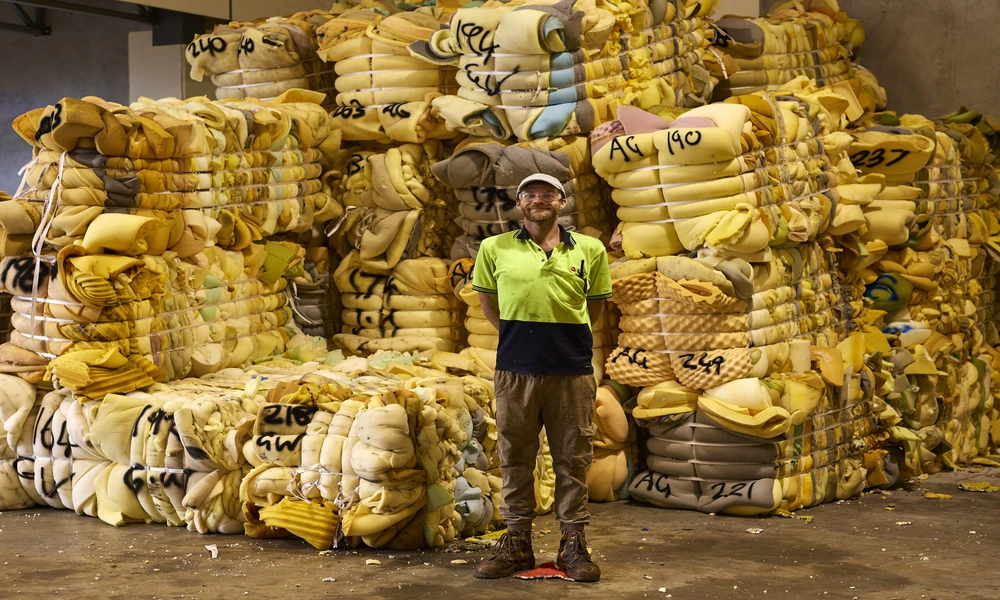
Mattresses make up an outsized share of what we throw away, both in bulk and in environmental impact. Each year, millions of mattresses are tossed into landfills around the world, where they linger for decades, taking up valuable space and leaching chemicals into the ground. With growing concerns about waste, resource scarcity, and landfill limitations, the search for sustainable solutions is more urgent than ever. Mattress recycling stands at the crossroads of innovation and necessity, prompting a critical question: Can adopting sustainable mattress recycling truly lift the heavy burden landfills have carried for decades?
The Environmental Impact of Mattress Waste
Why Do Mattresses Pose a Unique Challenge in Landfills?
At first glance, a mattress may not seem especially problematic. Yet, its bulk, awkward shape, and multi-material construction make it one of the least landfill-friendly household items. Unlike other bulky waste, mattresses don’t compact easily, so they take up disproportionate space. The springs can even tangle machinery at landfill sites, causing costly delays.
The Longevity of Mattress Materials in the Environment
A mattress is not a single material. Layers of polyurethane foam, steel springs, wood, and textile fabrics make these products durable in the bedroom and stubbornly persistent in the environment. Some foam can take up to 80 years to break down, while metal springs survive even longer. The result? Mattresses can spend generations entombed in landfills.
Current Statistics on Mattress Disposal Globally and in Canada
Globally, estimates suggest that tens of millions of mattresses are discarded every year. In North America alone, the number often exceeds 20 million annually. Canada, with its growing population and consumer culture, contributes significantly to this total, with millions added to the country’s landfill sites each year. The environmental cost is quietly stacking up, layer upon layer.
Innovations in Sustainable Mattress Recycling
How Does Mattress Recycling Work?
Recycling a mattress is no simple feat. The process typically involves breaking it down into its core materials. Specialized machinery strips away fabric and foam, separates out metals and wood, and prepares each for reuse in manufacturing, insulation, or energy recovery. This approach minimizes waste and conserves resources but demands technical precision and investment.
The Role of Companies like Recyc-Matelas in the Recycling Ecosystem
Pioneers in the industry, such as Recyc-Matelas Canada, have demonstrated that mattress recycling is viable at scale. With more than four million mattresses already recycled, their model proves that the right infrastructure and expertise can transform waste into opportunity. By operating in provinces like Quebec and Ontario, they offer a regional lifeline, diverting significant volumes from landfill and setting a standard for others to follow.
Recovery and Reuse of Mattress Components: Foam, Metal, and Fabric
What happens to a mattress once it is recycled? The answer is surprisingly optimistic. Steel springs are melted down and used in new products. Foam is often reprocessed into carpet underlays or insulation. Fabrics may be shredded for industrial rags or repurposed in automotive and construction sectors. Each piece that avoids the landfill extends the life cycle of valuable resources.
Economic and Social Benefits of Mattress Recycling
Reducing Landfill Costs and Extending Landfill Lifespan
Every mattress recycled translates directly into saved landfill space. This reduction eases the financial burden on municipalities, which are already grappling with limited landfill capacity and rising operating costs. The longer landfill sites last, the less frequently new ones need to be developed, preserving land and minimizing community disruption.
Job Creation and Industry Growth in the Recycling Sector
The rise of mattress recycling is more than an environmental win; it is a driver for new jobs. From collection and logistics to processing and secondary manufacturing, recycling facilities fuel local employment and spark innovation across supply chains. In regions where programs have launched, skilled labor demand is climbing.
Raising Public Awareness and Consumer Participation
Sustainable mattress recycling only works if consumers participate. Public education campaigns are now highlighting the environmental case and helping shift behaviors. As awareness grows, so does the expectation for retailers and municipalities to offer recycling options as a standard part of mattress disposal.
Overcoming Barriers to Widespread Mattress Recycling
Logistical Challenges: Collection, Transportation, and Processing
Moving large, heavy mattresses from homes to recycling centers is no easy task. Success relies on efficient collection networks and partnerships between private companies and municipal services. Streamlining these logistics remains a key challenge for scaling recycling efforts.
Regulatory Frameworks and Policy Incentives Needed
Laws and incentives matter. In jurisdictions where extended producer responsibility (EPR) laws exist, manufacturers and retailers are required to ensure the responsible disposal of end-of-life mattresses. Governments that offer grants, tax breaks, or subsidies see faster growth in recycling rates.
Public Perception and Behavioral Hurdles
The journey from landfill to recycling is also cultural. Some people are unaware that recycling is an option, while others worry about costs or convenience. Addressing these perceptions requires persistent outreach and visible, easy-to-use programs.
The Future of Mattress Recycling and Circular Economy Potential
Technological Innovations on the Horizon
Emerging technologies are making mattress recycling more efficient and less labor-intensive. Automated disassembly, improved material separation, and new applications for recycled materials are all pushing the industry forward.
Integrating Recycling into Mattress Design for Easier Reprocessing
Manufacturers are beginning to design mattresses with recycling in mind. Simplifying layer construction and reducing glued or laminated components could make tomorrow’s mattresses easier to recycle and even safer for workers to dismantle.
Vision for a Zero-Waste Mattress Industry
The ultimate goal is a closed-loop system: every discarded mattress becomes raw material for new products, eliminating landfill dependency. While this vision is ambitious, the steady progress of innovators and proactive policy suggest that a zero-waste mattress future may not be far off. The burden of decades of landfill waste could finally be lifted, one recycled mattress at a time.