

As businesses expand, their manufacturing requirements often become more complex. New products, increased order volumes, revised component designs, and tighter delivery schedules can change the type of machining support a company needs. Working with an experienced machine shop Dallas provider may be relevant for projects ranging from early prototypes to established production programs, particularly when precision and dependable capacity remain important as operations develop.
Why Manufacturing Requirements Evolve as Businesses Grow
Growth can introduce new manufacturing challenges. A company may initially require a small number of prototype components, but successful product development can eventually lead to recurring orders and significantly higher production volumes.
Designs may also change during development. Engineering teams can revise dimensions, materials, tolerances, or component configurations as products are tested and refined.
These changes make flexibility an important consideration when evaluating machining capabilities. A manufacturing partner should be able to understand current requirements while remaining adaptable as specifications and production quantities develop.
Balancing Production Volume With Precision
Higher production volumes do not eliminate the need for dimensional accuracy. In fact, maintaining consistent specifications across larger batches can become increasingly important as component quantities increase.
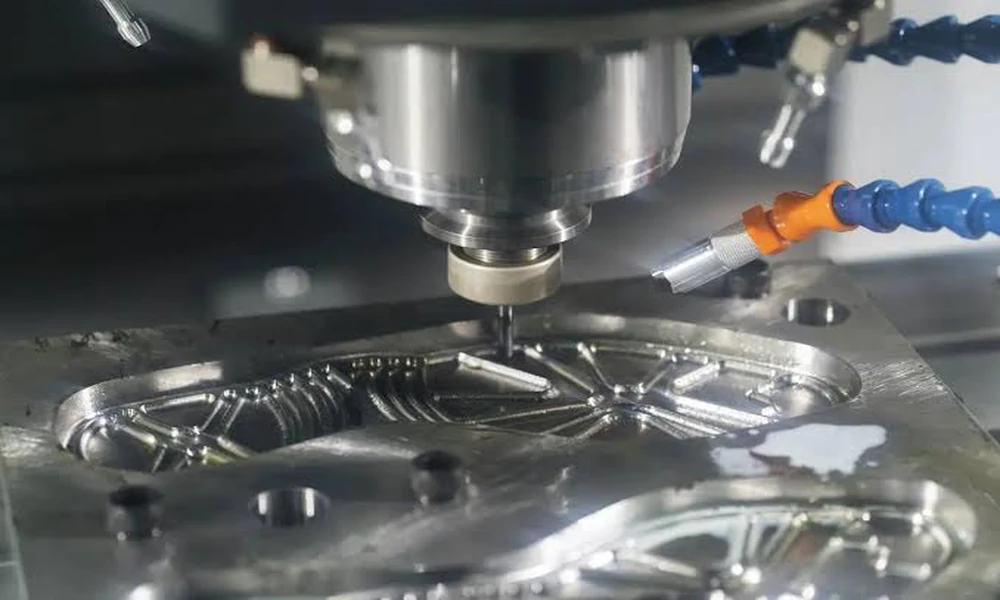
CNC machining can support repeatable production by using programmed machining operations. However, consistency also depends on tooling, machine condition, workholding, process control, and inspection procedures.
Manufacturers should therefore consider both production capacity and quality capabilities. A shop equipped to handle larger quantities should also have processes for maintaining dimensional consistency throughout the production run.
The Value of Scalable Machining Capabilities
Scalability allows manufacturing processes to adjust as requirements change. A machining provider may support prototype development, low-volume production, short runs, and larger recurring orders using different equipment, workflows, and scheduling approaches.
Texas has a diverse industrial economy, and companies in different regions may have different production priorities. For example, a machine shop Houston operation may encounter projects associated with energy, industrial equipment, petrochemical, maritime, and related sectors.
Scalable capabilities can be particularly useful when a component moves from development into commercial production. The manufacturing process may need to accommodate increased quantities without sacrificing the specifications established during earlier stages.
Managing Prototypes, Short Runs, and Larger Orders
Prototypes often require close attention to design details and may involve several revisions. During this stage, communication between engineers and machinists is especially valuable because manufacturing considerations can influence how efficiently a component is produced.
Short production runs may require a balance between setup time, machining costs, material availability, and delivery requirements. Larger orders introduce additional considerations, including production scheduling, tooling management, inspection, and inventory planning.
Providing complete drawings, three-dimensional models, material specifications, quantities, tolerances, and finishing requirements gives machining teams a clearer understanding of the project.
Planning for Future Production Requirements
Forward planning can help businesses avoid manufacturing disruptions when demand increases. Companies should consider whether current suppliers have sufficient equipment, workforce, production capacity, and quality processes to accommodate future orders.
Lead times should also be reviewed. Material procurement, machining, finishing, inspection, and shipping can all affect the time required to deliver completed components.
Maintaining clear production forecasts allows machining providers to understand upcoming requirements and plan capacity more effectively.
Building Manufacturing Flexibility into Growth Plans
Manufacturing support should evolve alongside the business. Prototypes, short runs, and larger production orders can each require different approaches, making flexibility and communication valuable throughout the product lifecycle.
By evaluating machining capabilities, production capacity, quality controls, material expertise, scheduling, and scalability together, growing manufacturers can establish production arrangements that better accommodate both current projects and future industrial requirements.